



Ask ten miniature makers for the best glue and you will hear five different answers. That is because there is no single glue that does everything well. Wood joints, paper signs, tiny plastic props and acrylic windows all behave differently, and the glue that holds one beautifully can warp, fog or stain another.
This guide explains which glue to reach for at each stage of a build, how much to use, and the small habits that keep joints clean. It is written for wooden miniature houses and shelf scenes like the ones in our DIY miniature house collection, but the same rules apply to most small-scale crafts.
Quick Answer: The Best Glue for Miniatures
If you want one glue that covers almost every step of a miniature kit, we recommend B7000, a clear, flexible multi-purpose adhesive (more on it below). If you prefer to match the glue to each material, this is the classic line-up:
- Wood-to-wood joints (MDF, plywood, basswood): a PVA wood glue or white craft glue. Strong, cleans up with water and gives you a minute or two to adjust.
- Paper, card and printed decorations: a tacky glue or a glue stick. Thick enough not to soak through and wrinkle the paper.
- Tiny props, metal and plastic parts: a gel super glue (cyanoacrylate). Grabs in seconds, which is exactly what you want for parts too small to clamp.
- Clear windows, acrylic and anything that must stay invisible: a clear-drying craft glue that is labelled safe for plastics. Avoid super glue here, because its fumes can leave a white haze.
Most makers keep two or three of these on the table rather than forcing one glue to do every job.
Our Pick: B7000 Glue for Miniature Kits
B7000 is a clear, highly elastic, waterproof multi-purpose adhesive made from a blend of soft acrylic and rubber. Because it stays slightly flexible once dry, joints are less likely to crack when you handle or move the finished model, and it dries transparent, so small mistakes stay almost invisible.
It bonds a wide range of materials, including metal, glass, ceramic, wood, leather, rubber, PVC, fibre, paper and fabrics. That makes it unusually useful for miniature builds, where a single scene can mix wooden walls, paper signs, fabric curtains, plastic windows and tiny metal props.
Use it for: wooden structures, paper decorations, fabric details, window frames and small props.
How to use it well:
- Squeeze a very thin line through the fine nozzle, or pick up a small dot with a toothpick for tiny parts.
- Wait a few seconds for it to turn slightly tacky, then press the parts together and hold briefly.
- Work in a well-ventilated room and keep the cap on between uses.
- Let the model cure fully before moving it or adding weight. Follow the drying times on the tube.
Wood Glue and White Craft Glue (PVA)
PVA glue is the workhorse of miniature building. It soaks slightly into wood fibres, which makes the joint strong once it cures. It also stays workable for a short time, so you can nudge a wall square before it sets.
Use it for: walls, floors, staircases, roof panels and furniture frames.
How to use it well: apply a thin line with a toothpick rather than squeezing straight from the bottle. Press the parts together, hold for 30 to 60 seconds, then leave the joint alone while you work on another section. Wipe any squeeze-out with a barely damp cotton bud before it dries, because dried PVA can leave a shiny mark on unfinished wood.
If your kit uses tab-and-slot pieces, test-fit everything dry first. Many joints in a well-cut kit hold by friction, and glue is only needed where the instructions call for it.
Tacky Glue for Paper and Fabric
Tacky glue is a thicker PVA. It grabs faster and contains less water, so it is much less likely to wrinkle printed paper, book spines, wallpaper or tiny fabric curtains.
Use it for: paper signs, posters, flooring sheets, roof shingles, leaves and flowers.
Tip: spread a very thin film with a scrap of card, wait a few seconds until it turns tacky, then place the paper. Smooth it from the centre outwards with a soft cloth to push out air bubbles.

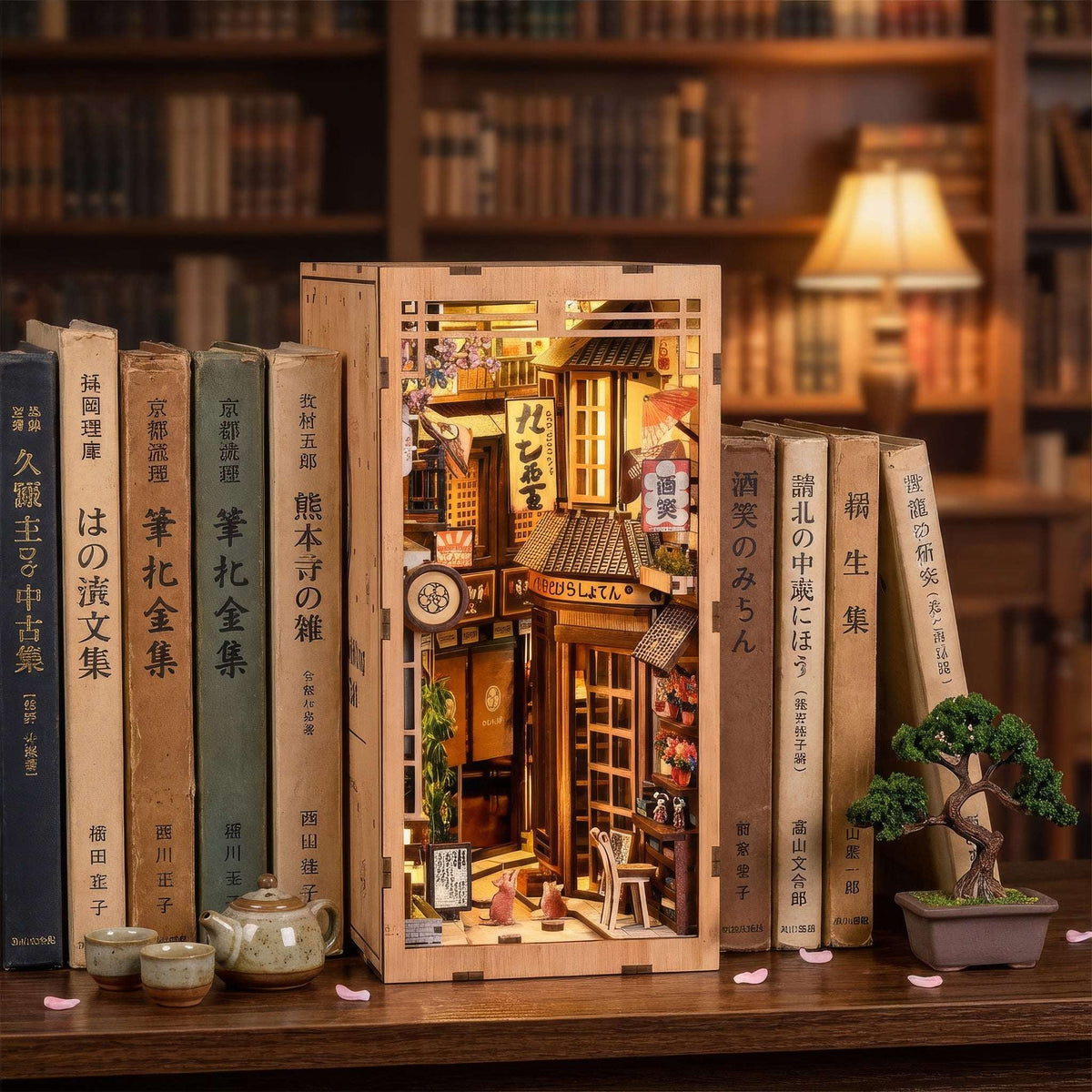
Kasuga Grocery Store DIY Mini Book Nook Kit · from $59.00
A good first build for practising glue control. The box includes pre-cut wooden pieces, a pre-assembled LED, sandpaper, tweezers and paper decorations, and the tiny shelf items reward a light touch with tacky glue.
Super Glue (Cyanoacrylate) for Tiny Parts
Super glue bonds in seconds and is ideal for parts so small you cannot clamp them: a teacup on a saucer, a lantern on a hook, a cat on a windowsill. Choose the gel version; it does not run into places you did not intend.
Use it for: small props, metal pieces, resin figures and quick repairs.
Avoid it on: clear plastic and acrylic (fogging), large wooden joints (brittle and no adjustment time) and anything your fingers are holding.
Tip: put a drop on a piece of foil and pick it up with a toothpick or pin. Hold the part with tweezers, not fingertips.
Clear Craft Glue for Windows and Acrylic
Windows and acrylic panels are where glue mistakes show the most. Use a clear, solvent-free craft glue that says it bonds plastics and dries transparent. Apply it only to the frame edge, never across the panel, and let it cure fully before touching it. B7000 also dries clear and bonds glass and PVC, so a thin bead along the frame edge works well here too.
Glue for Lights and Wiring
Do not glue over LED components or battery boxes. Most miniature kits route their wires through dedicated channels, and the lighting needs to stay accessible in case you have to change batteries or reseat a connector. If a wire needs holding in place, use a small dot of tacky glue on the wire itself, or a strip of thin tape, and keep it away from the solder points.
Do Miniature Kits Come With Glue?
Usually not. Glue is restricted for air shipping, so most miniature kits, including ROCOXIA kits, include the pre-cut wooden pieces, lighting, tools and decorations but leave the glue to you. Have your glue ready before you open the box, and check the instructions to see which steps need it.

Library of Books DIY Book Nook Kit with Music Box · from $74.90
An arched library scene with tiny shelves of books, a motion-sensor light and a built-in music box. Plenty of small paper and wooden details where a clear, flexible glue makes the build easier.
A Simple Glue Kit for Your Workbench
- B7000 clear multi-purpose glue as your all-rounder
- A small bottle of PVA wood glue or white craft glue
- Tacky glue for paper and fabric
- Gel super glue for tiny props
- Toothpicks, cotton buds and a scrap of foil or card as a glue palette
- Fine tweezers and a craft knife
- Small clamps or clothes pegs, plus masking tape to hold parts while they dry
For more build advice, read our beginner assembly tips.
Five Habits for Clean, Strong Joints
- Dry-fit first. Make sure the parts go together before any glue comes out.
- Less is more. A thin layer bonds better than a thick one and leaves nothing to wipe up.
- Glue in sections. Let one wall set before adding the next, so the structure stays square.
- Keep a damp cloth nearby. PVA wipes off easily when wet, not when dry.
- Give it time. Most craft glues feel dry in minutes but take hours to reach full strength. Wait before adding weight or handling the model heavily.

Twilight Sakura Path DIY Book Nook Kit · from $99.00
A detailed sakura street scene with plenty of small decorative parts. A rewarding project once you are comfortable using different glues for wood and paper.
Keep Reading
- What Is a Book Nook?: what the term means, where the trend came from and how to display one.
- DIY Music Box Kits: how a wooden music box works and seven scenes that play a melody.
- Fairy House Ideas: treehouses, woodland cottages and storybook shops to build.
Frequently Asked Questions
What is the best glue for miniatures?
For an all-in-one option, we recommend B7000: it dries clear, stays flexible and bonds wood, paper, fabric, metal, glass and PVC. If you prefer specialist glues, use PVA wood glue for wooden structures, tacky glue for paper, gel super glue for very small props and a clear plastic-safe craft glue for windows.
What is B7000 glue used for?
B7000 is a clear, elastic, waterproof multi-purpose adhesive made from a soft acrylic and rubber blend. It works on metal, glass, ceramic, wood, leather, rubber, PVC, fibre, paper and fabrics, which is why it suits miniature kits that combine many materials.
Can I use super glue on wooden miniature kits?
You can for small props, but it is not ideal for main wooden joints. It sets too quickly to adjust, becomes brittle, and can stain unfinished wood. PVA glue gives a stronger, more forgiving joint for walls and floors.
What glue will not wrinkle paper?
Tacky glue or a glue stick. Both contain less water than standard white glue, so printed paper and thin card stay flat. Apply a very thin layer and smooth the paper from the centre outwards.
Which glue is safe for clear plastic windows?
Use a clear-drying craft glue labelled for plastics, applied only to the frame edges. Avoid super glue near clear parts because its fumes can leave a cloudy white film.
Do miniature kits come with glue?
Usually not. Glue is restricted for air shipping, so most kits, including ROCOXIA kits, include the wooden parts, lights, tools and decorations but not glue. Have a clear multi-purpose glue such as B7000 ready before you start.
How long should glue dry on a miniature build?
Most craft glues are touch-dry within minutes but need several hours to reach full strength. Work on another section while a joint sets, and wait until the glue has fully cured before moving or displaying the model.
Share:
Christmas Gifts for Homebodies Who Love Making Things
Fairy House Ideas: 8 Enchanted Builds for Your Shelf