


How to Display DIY Miniature Houses in Small Spaces
- by LIN LUO
FIRST TIMER?
Subscribe to our newsletter and be the first to hear about our new arrivals, special promotions and online exclusives.
Displaying miniature houses presents a delightful challenge when floor space is at a premium. These intricate assemblages—whether handcrafted book nooks, diminutive architectural marvels, or thematic vignettes—deserve prominence without overwhelming your living environment. The art lies in transforming spatial constraints into creative opportunities, employing vertical planes, multifunctional surfaces, and optical techniques that amplify both your miniatures and your room's perceived dimensions.
Before arranging your collection, conduct a thorough spatial audit. Measure wall dimensions, nook depths, and clearance zones around furniture. Small spaces demand strategic thinking rather than random placement. Identify underutilized areas: the gap above doorways, recessed alcoves, windowsill expanses, or the dead space flanking your entertainment console.
Consider sightlines carefully. Where do eyes naturally travel when entering each room? These focal trajectories become prime real estate for your most captivating pieces. Conversely, peripheral zones work beautifully for secondary displays that reward closer inspection. Light sources—both natural and artificial—dramatically influence miniature presentation, casting shadows that either enhance dimensional depth or create distracting clutter.
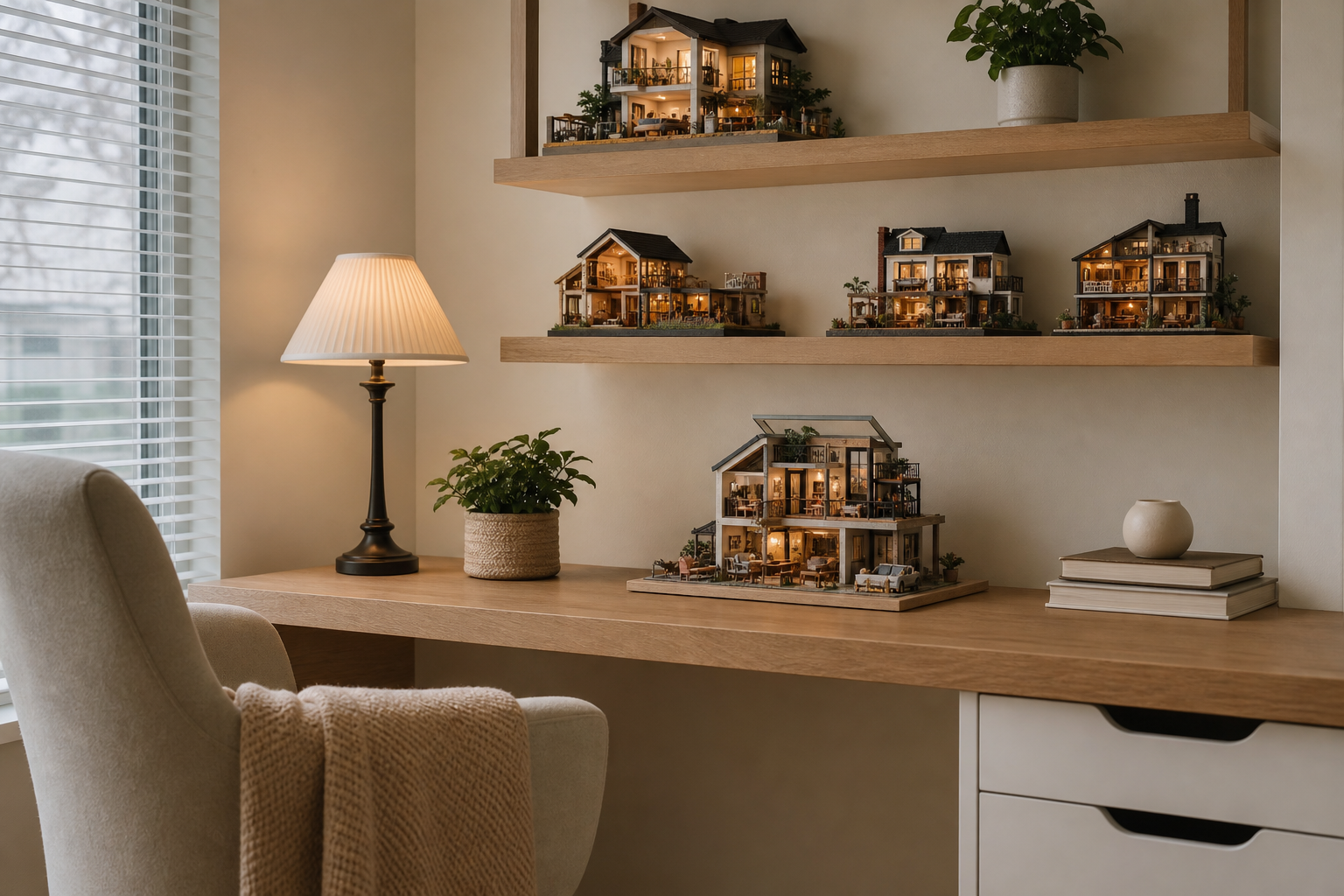
Walls represent your most abundant yet frequently neglected display territory. Floating shelves installed at staggered heights create dynamic galleries without consuming floor space. Opt for narrow-profile shelving—four to six inches deep suffices for most miniature houses—that projects minimally while supporting your assembled creations securely.
Shadow boxes transform miniatures into three-dimensional artwork. These enclosed frames protect delicate components from dust accumulation while establishing defined visual boundaries. Install multiple shadow boxes in grid formations or asymmetrical clusters depending on your aesthetic preference. The enclosure creates museum-quality presentation that elevates DIY assemblies into curated exhibits.
Corners typically gather neglect in spatial planning. Triangular or radial corner shelves exploit these junctions brilliantly, converting dead angles into captivating display vertices. Stack corner units vertically to establish towers of miniature wonderment that draw gazes upward, effectively elongating room height perception.
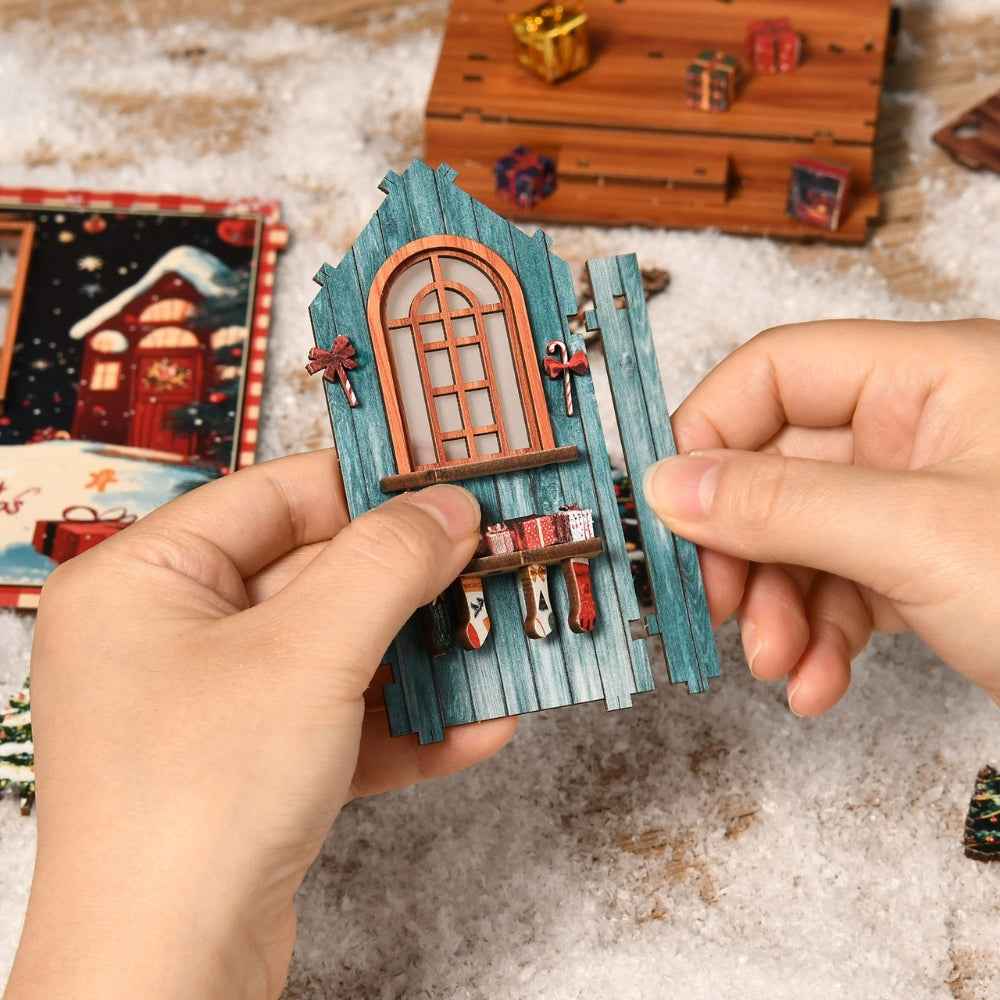
When planning displays for compact environments, the dimensional specifications of your miniature houses matter considerably. ROCOXIA's DIY miniature house kits offer perfectly proportioned assemblies designed with display versatility in mind. These collections encompass book nook scenes that nestle between volumes on existing shelving, freestanding mini houses suitable for tabletop vignettes, and mechanical puzzles that function as kinetic sculpture.
The variety of themes—from Victorian streetscapes to whimsical fantasy realms—allows you to curate collections that complement existing décor rather than competing with it. Each kit arrives with comprehensive instructions ensuring your assembled piece achieves professional presentation quality worthy of prominent display. The parts replacement guarantee means damaged components never compromise your finished exhibit, while the flexible return policy lets you experiment with different themes until discovering the perfect fit for your spatial narrative.
Furniture that serves dual purposes maximizes efficiency in constrained quarters. Coffee tables with glass tops allow miniature arrangements beneath the surface, protected yet visible. Ottomans with display-case lids transform seating into exhibition space. Headboards featuring built-in shelving convert bedroom walls into nighttime galleries illuminated by reading lamps.
Étagères—those elegant open shelving units—provide substantial display capacity while maintaining visual permeability. Their skeletal structure prevents the heaviness that solid bookcases impose, keeping spaces feeling open despite housing numerous miniatures. Position étagères perpendicular to walls as room dividers that showcase both sides simultaneously.
When depth is limited, visual layering generates the illusion of dimensionality. Position smaller miniatures forward with progressively larger pieces receding backward. This forced perspective mimics photography techniques, tricking perception into sensing greater spatial volume.
Incorporate mirrors strategically behind miniature arrangements. Reflective surfaces double apparent depth while capturing angles invisible from frontal viewing positions. Antiqued or tinted mirrors add atmospheric quality without the stark reflection of standard glass. Exercise caution with mirror placement to avoid creating confusing visual echoes or compromising the miniature's intended narrative.
Acrylic or wooden risers establish elevation variance within single surfaces. Three-tiered arrangements allow multiple miniatures to occupy the same footprint while each maintains visibility. Clear acrylic risers disappear visually, spotlighting the miniatures themselves rather than the display infrastructure. Wooden risers contribute warmth and can be stained or painted to coordinate with your miniatures' thematic elements.
Proper illumination transforms miniature displays from pleasant to spectacular. LED strip lights affixed beneath shelves cast downward illumination that eliminates shadows while consuming minimal electricity. Puck lights installed above or behind miniatures create dramatic backlighting that silhouettes architectural details.
Consider color temperature deliberately. Warm white (2700-3000K) evokes cozy, vintage atmospheres perfect for Victorian or rustic-themed miniatures. Cool white (4000-5000K) suits contemporary or fantasy themes with its crisp, clean quality. Dimmable options provide flexibility for adjusting ambiance according to time of day or occasion.
Your most exceptional miniatures merit dedicated illumination. Small directional spotlights—museum lights or picture lights—focus attention precisely where desired. These fixtures create hierarchy within collections, guiding viewers' eyes to featured pieces while supporting elements remain pleasantly lit but subordinate.
Limited display space necessitates rotation strategies. Rather than viewing this as limitation, embrace it as opportunity for continual reinvention. Seasonal rotations align miniature themes with calendar periods: autumnal harvest scenes for October, winter villages for December, botanical gardens for spring months.
Store non-displayed miniatures properly to preserve their condition. Archival boxes with acid-free tissue prevent component degradation. Photograph each miniature from multiple angles before storage, creating visual inventory that simplifies future display planning and helps track collection growth.
"The most successful miniature displays don't fight spatial constraints—they dance with them, finding rhythm in limitation and beauty in carefully chosen restraint."
Miniature houses shouldn't exist in isolation. Integrate them within broader decorative tableaux that enhance their narrative impact. Position botanical miniatures alongside actual potted succulents, blurring boundaries between miniature and full-scale nature. Display nautical-themed mini houses with collected shells, weathered rope, or vintage maritime instruments.
This contextual embedding helps miniatures feel intentionally curated rather than randomly placed. It also distributes visual weight across surfaces, preventing that "museum case" appearance where objects float disconnectedly. The interplay between miniature craftsmanship and complementary objects enriches both.
Whether harmonizing or contrasting with existing palettes, color relationships determine visual success. Monochromatic schemes—displaying miniatures whose dominant hues match wall colors or furnishings—create sophisticated cohesion. Alternatively, complementary color placement (opposite sides of the color wheel) generates energizing vibrancy that makes miniatures pop dramatically against backgrounds.
Every compact environment presents unique obstacles. The following table outlines frequent challenges with corresponding solutions:
| Challenge | Solution Approach |
|---|---|
| Dust accumulation on intricate details | Use enclosed display cases or regular gentle cleaning with soft brushes |
| Lack of wall-mounting permission (rentals) | Employ freestanding ladder shelves or tension-rod systems requiring no permanent installation |
| Competing visual clutter | Edit ruthlessly—display fewer pieces with breathing room rather than crowded arrangements |
| Pet or child accessibility concerns | Elevate displays above reach zones or use secure enclosed cabinetry |
Think beyond conventional surfaces. Staircase landings offer transitional spaces perfect for captivating miniature vignettes that reward climbing effort. Bathroom vanity corners—often overlooked—can house single statement pieces that transform utilitarian spaces into whimsical retreats.
Kitchen windowsills above sinks provide natural illumination for miniatures while occupying otherwise vacant real estate. Closet interiors, when left partially open, create intriguing peekaboo moments where miniature scenes surprise and delight. Even ceiling spaces accommodate hanging displays when miniatures are lightweight and properly secured.
For literature enthusiasts with existing bookcases, book nooks represent ingenious solutions. These vertical miniature scenes insert between book volumes, appearing as magical doorways to alternate dimensions. They consume virtually zero additional space while adding tremendous visual interest to what might otherwise be monotonous shelving. ROCOXIA's book nook collections specifically address this integration, offering themed scenes that complement literary collections beautifully.
Once beautifully arranged, miniature displays require ongoing care. Establish quarterly cleaning routines using soft-bristle brushes or compressed air to dislodge accumulated dust without disturbing delicate assemblies. Avoid liquid cleaners that might damage painted surfaces or loosen adhesive bonds.
Monitor environmental conditions affecting miniature longevity. Excessive humidity warps wooden components while extreme dryness cracks adhesives. Direct sunlight fades pigments over time. Position displays away from heating vents, air conditioner outputs, and unfiltered windows. These preventative measures preserve your assembled artistry for years of enjoyment.
Quantity depends less on room dimensions than on display methodology and miniature sizes. Vertical wall installations might accommodate fifteen to twenty pieces, while floor-focused arrangements limit you to perhaps five to eight. Prioritize quality of presentation over quantity—three perfectly showcased miniatures surpass twenty crowded together indiscriminately.
If feng shui resonates with your design philosophy, absolutely incorporate its wisdom. Position miniatures in commanding positions with clear views of doorways, avoid pointing sharp architectural elements toward seating areas, and maintain clutter-free zones around displays to facilitate energy flow. However, personal aesthetic satisfaction ultimately trumps any design doctrine.
Certain miniature designs incorporate functionality—mechanical puzzles with moving components, book nooks supporting adjacent volumes, or mini houses with interior storage compartments. This dual-purpose utility particularly benefits small spaces where every object should ideally serve multiple roles. Select miniatures thoughtfully with functionality as secondary consideration to aesthetic appeal.
Displaying miniature houses in compact environments demands creativity, not compromise. By exploiting vertical dimensions, embracing multi-functional furniture, manipulating lighting artfully, and curating thoughtfully, you transform spatial limitations into distinctive advantages. Your assembled miniatures deserve presentation that honors the craftsmanship invested in their creation while enhancing your living space's character and charm.
The key lies in viewing your entire environment as potential gallery space rather than restricting yourself to conventional display zones. With strategic planning and willingness to experiment, even the most modest apartment can showcase an impressive miniature collection that sparks conversation, ignites imagination, and brings daily joy through its presence.
Love book nooks? Explore more stories, DIY tips, and behind-the-scenes builds on our Substack | WordPress | Medium | Tumblr | Ideal House | Linktree
Share:
A Few Helpful Tips for Building Your Hogsmoor Station Kit ✨
7 Relaxing Hobbies for Adults to Try in 2026